
Trapped in a narrative
The complex power of calling oneself "an addict," Richard Siken's search for post-stroke poetry, displacement in New Hampshire, and more

What role does the word “addict” play in recovery? Can poetry rewire a brain? How do we write histories that don’t treat displacement as a historical inevitability?
This week at Public Seminar, Eva Szilardi-Tierney interviews E. M. Ippolito about her new book rethinking narratives of urban renewal in Portsmouth, New Hampshire.
Rayna Salam reviews the poetry collection I Do Know Some Things, in which Richard Siken attempts to recover his language and selfhood in the aftermath of a debilitating stroke.
And Hanna Pickard asks: If identifying as an “ex-addict” plays a positive role in recovery, how might the label “addict” inform a person’s drug use?
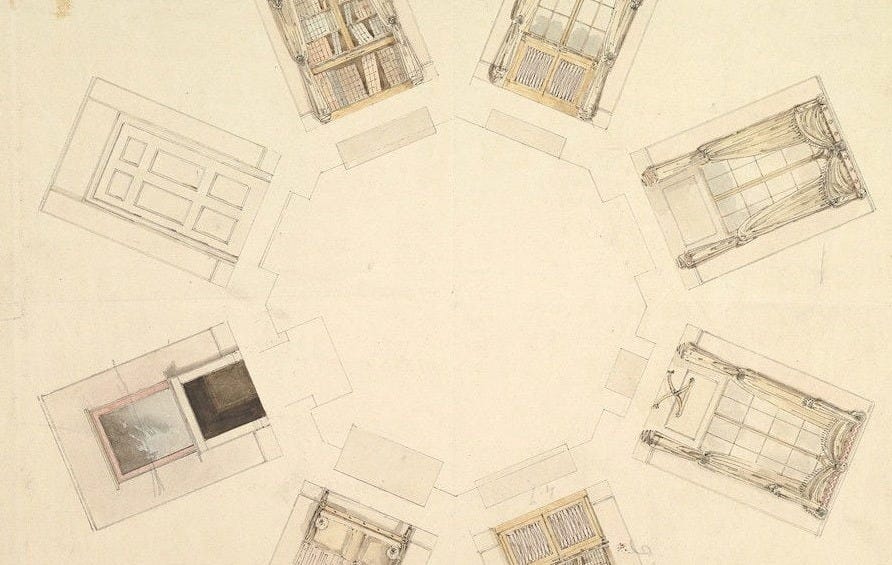
Brick by Brick: Richard Siken Rebuilds His Interior World
Rayna Salam
“Who you are and who you think you are: They grind against each other, sand in the frosting,” poet and painter Richard Siken writes in his long-awaited third collection. I Do Know Some Things (Copper Canyon Press, 2025) continues his previous exploration of selfhood, but with a harrowing purpose. In the aftermath of a debilitating stroke that left his right side paralyzed in 2019, Siken attempts to recover his language, body, and memory in an intensely autobiographical book of prose poems that is electrifying and difficult to read. If your mind buckles and your body doesn’t remember, what are the stakes of metaphor? What does poetry have to become to build back a self?
What Would You Do Alone in a Cage With Nothing but Cocaine?
Hanna Pickard
Perhaps you live in a community of people who use drugs together. Outside of that community, you may have to work to hide your drug use—whether from family, friends, colleagues, or even the police. Indeed, to sustain your identity, you may even hide some aspects of your drug use from yourself—some of what it has cost you. But, to really imagine what it would be like to identify as an addict, you must imagine that drug use is one of the defining features of your life and a significant part of what defines you. That is what it is to identify as an addict.

Portsmouth, Displacement, and Belonging in The Tears of Other People
E. M. Ippolito, Eva Szilardi-Tierney
E. M. Ippolito’s relationship to her hometown of Portsmouth, New Hampshire, is a complicated one. While Ippolito’s exploration of Portsmouth’s working-class history began when she was a college student, it was her own displacement from Portsmouth that personalized her research. Learning the story of Portsmouth’s 1960s urban renewal—a federally funded project that replaced the working-class, multi-ethnic, immigrant enclave known as Puddle Dock with a colonial history museum—shed light on the modern gentrification that ultimately forced Ippolito out of the city. Displaced but still deeply attached to Portsmouth, Ippolito began to ask the question, “Who or what enables displacement?”
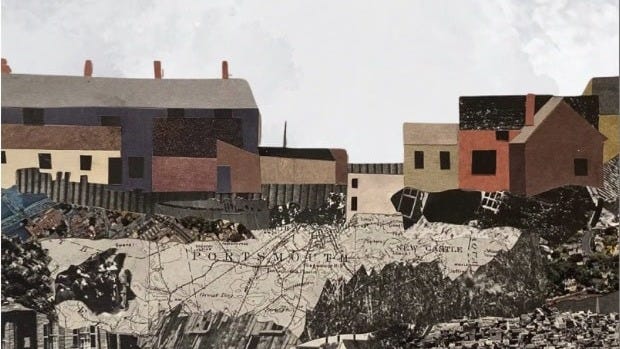
Class, Hegemony, and the Will to End a Neighborhood
E. M. Ippolito
As the long, snowy winter of 1958 drew to a close, the City of Portsmouth was in trouble. On Thursday, March 20, readers of the morning paper were greeted with the headline: “City May Lose $836,205 in US Funds.” Development plans to turn Puddle Dock into garden apartments had failed at the eleventh hour, leaving the city with no viable plan for the soon-to-be-empty waterfront, and by extension no means by which to empty it. Portsmouth Housing Authority leader Edwin J. Abbott was in the hot seat.
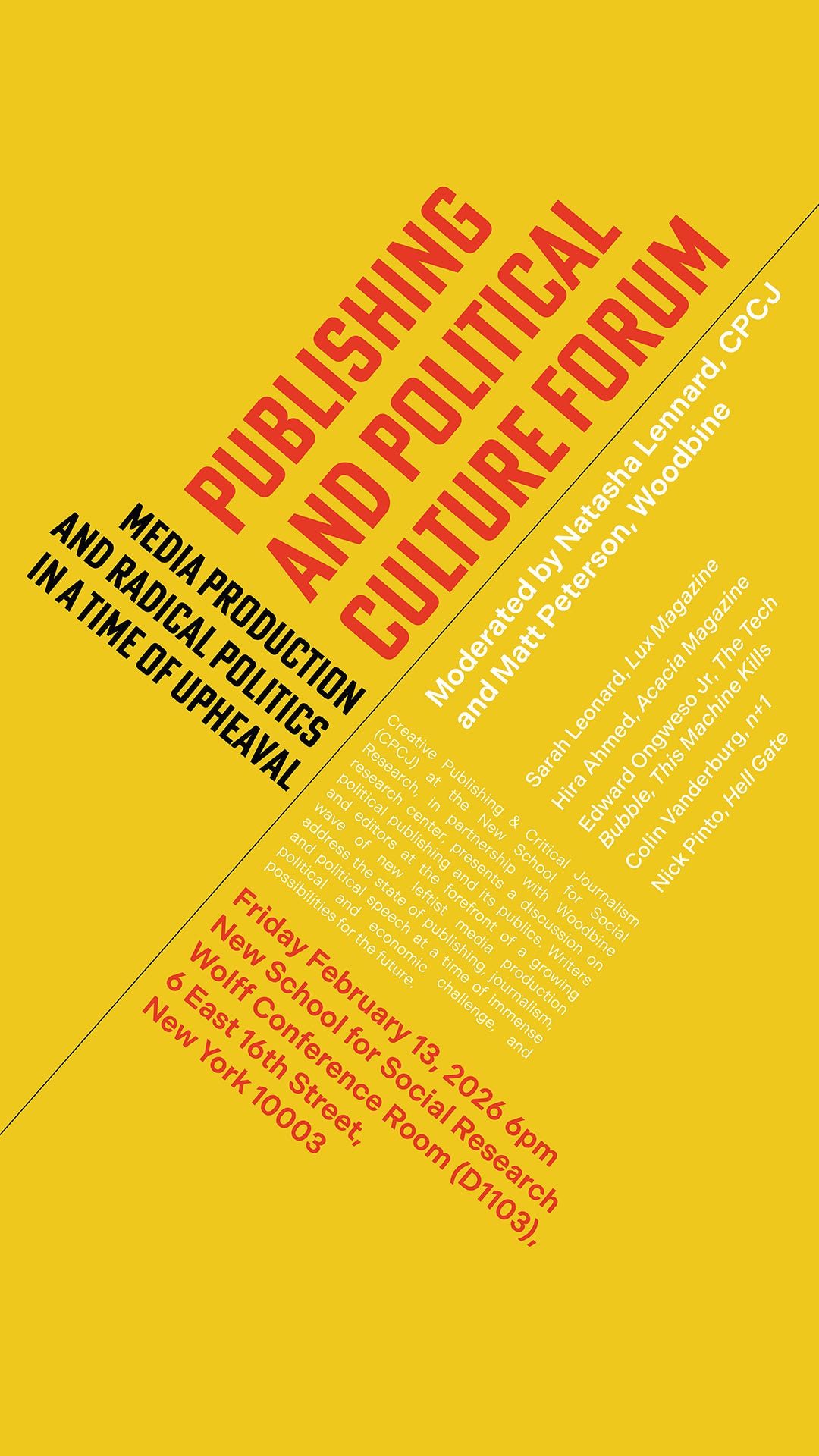
Tonight! Publishing & Political Culture Forum
Join us for a public conversation on February 23 convened by Natasha Lennard, Public Seminar editor and Associate Director of Creative Publishing & Critical Journalism
Creative Publishing & Critical Journalism (CPCJ) at The New School for Social Research, in partnership with Woodbine Research Center, presents a discussion on political publishing and its publics. Writers and editors at the forefront of a growing wave of new leftist media production address the state of publishing, journalism, and political speech at a time of immense political and economic challenge, and possibilities for the future.