
Looking back at the future
The Earth seen from space, North Korean women's soccer, and more

The first Asian woman to win a medal at the Winter Olympics was Han Pil-hwa, who won silver in speed skating at Innsbruck, Austria, in 1964. Her win also marked North Korea’s first appearance at the games. Two decades later, writes scholar Jung Woo Lee, the country had begun to strategically invest in certain sports as potential sources of collective identity and international prowess under the banner of autocratic socialism. “Women's football was one of the chosen disciplines.”
This week at Public Seminar, our authors consider our best-laid plans and the futures we dreamed of then. Jung Woo Lee looks at the long game of North Korean women’s football. Poet Val Vinokur returns to Leonardo da Vinci’s dream of tearing open prisons. And Laurie Sheck remembers the Earth seen through the Hasselblad camera of Apollo 8 astronaut William Anders, and its transformation since: “We have turned the sky into a mirror of our persistence and our forgetting.”
The Ostriches, Part IV, 26 Federal Plaza
Val Vinokur
Leonardo’s first inventions were machines
To tear the bars off windows and open
A prison from inside. He escaped the gibbet
And the stake and wandered the market
Buying caged birds to set free. Every sketch
And painting an endless draft for a picture
Of the mind in its movement, infinite.
![A lantern slideshows four overlapping illustrations of the Earth depicting its tilt at different time periods in the past, present and future. Dates represented are 13000 BC, 5544 BC, 1921 AD, 2296AD. Handwritten in blue ink at bottom left corner of plate is the text 'G53 CLW [illegible] Aug '22'.](https://substackcdn.com/image/fetch/$s_!4Ryk!,f_auto,q_auto:good,fl_progressive:steep/https%3A%2F%2Fsubstack-post-media.s3.amazonaws.com%2Fpublic%2Fimages%2Fbb89c0d0-19b0-4b23-9332-1bfdb1c4fd98_1605x1082.jpeg "A lantern slideshows four overlapping illustrations of the Earth depicting its tilt at different time periods in the past, present and future. Dates represented are 13000 BC, 5544 BC, 1921 AD, 2296AD. Handwritten in blue ink at bottom left corner of plate is the text 'G53 CLW [illegible] Aug '22'.")
Some Notes on the Earth Seen From Space
Laurie Sheck
The astronauts were each allowed one small white satchel for personal belongings. Inside Michael Collins’s were five packs of chewing gum, and a small hollow dried bean from India carrying inside it 50 tiny carved ivory elephants—through the blackness of space, these delicate creatures traveled with him.
From where he looked, Earth was simply blue and white, “not rich or poor … not envious or envied.” “Up close,” he said, the moon looks like “a withered peach pit … mysterious, subtle, but there is no comfort in it.”
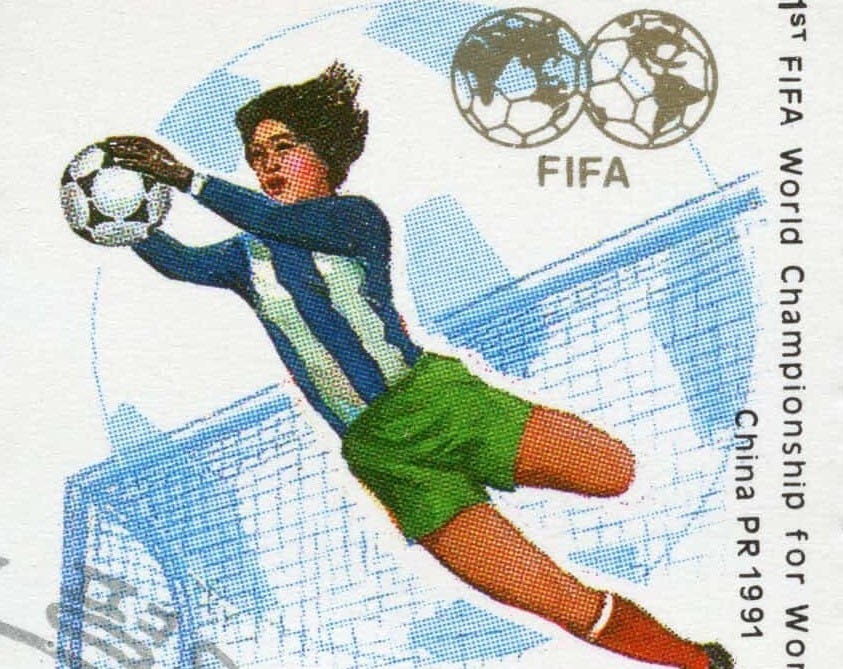
Feminism, Sports, and Football in North Korea
Jung Woo Lee
In the late 1980s, sports in North Korea began to carry a highly nationalistic undertone, and since then winning a trophy at an international competition has become an essential political project for the communist regime. In the final stage of the Cold War, when a mood of détente emerged between Washington and Moscow, the North Korean regime needed to strengthen its political doctrine amid fluctuating international circumstances. As noted earlier, sports offers communist Korea a useful vehicle for projecting a source of collective identity to its people under the banner of autocratic socialism. In this respect, the DPRK started to invest resources in the development of a few strategic sports that present the country with a strong chance of achieving international success. Women’s football was one of the chosen disciplines.
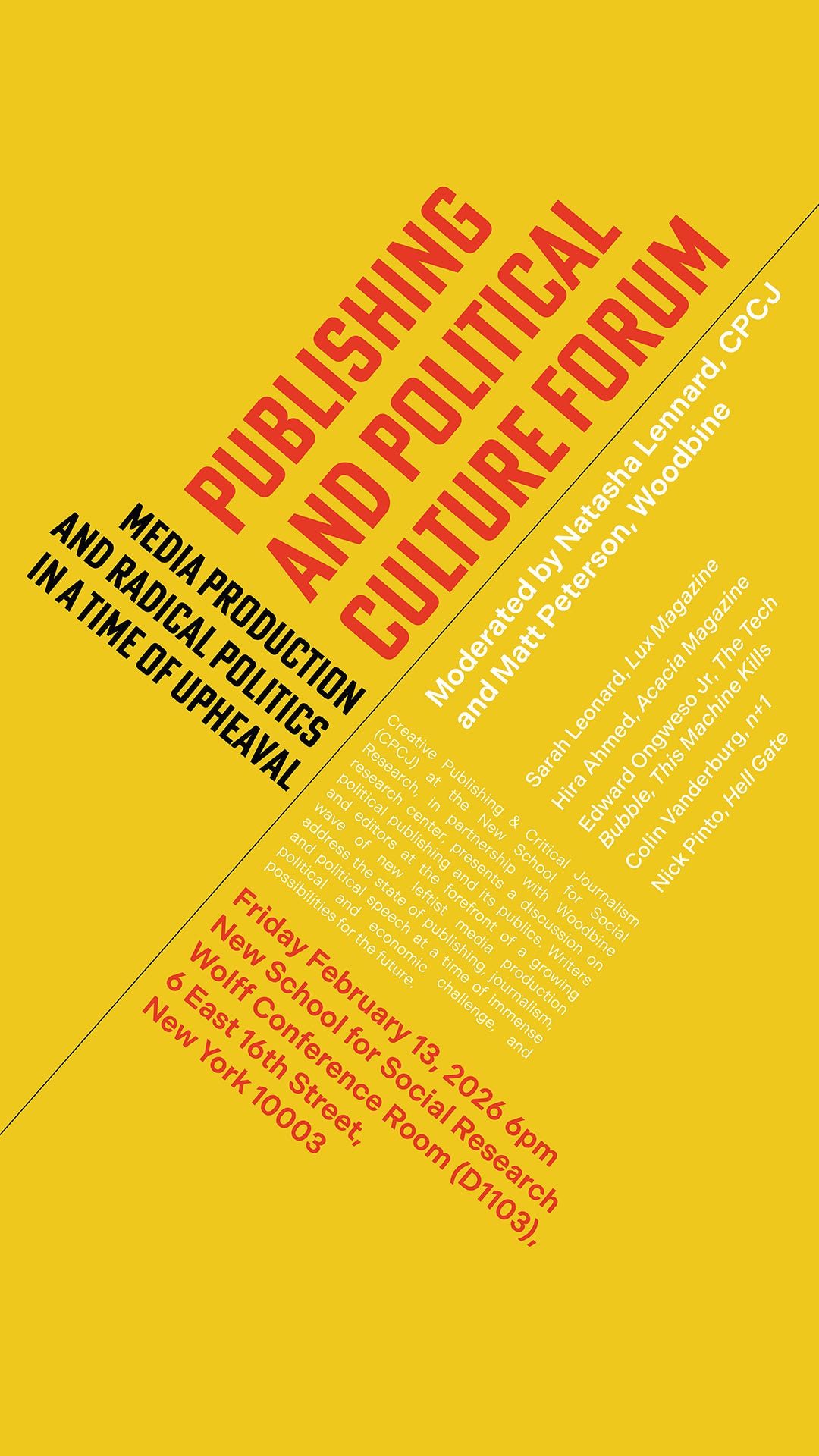
Publishing & Political Culture Forum: Media Production & Radical Politics in a Time of Upheaval
Join us for a public conversation on February 23 convened by Natasha Lennard, Public Seminar editor and Associate Director of Creative Publishing & Critical Journalism
Creative Publishing & Critical Journalism (CPCJ) at The New School for Social Research, in partnership with Woodbine Research Center, presents a discussion on political publishing and its publics. Writers and editors at the forefront of a growing wave of new leftist media production address the state of publishing, journalism, and political speech at a time of immense political and economic challenge, and possibilities for the future.