
Art gets nasty
Avant-garde embroideries, a McCarthy era "yellow curtain" of censorship, the troubling gay "jockness" of Heated Rivalry, and more

This week at Public Seminar, art tangles with Nazis, “worm-eaten” intellectual cowardice, political censorship and institutional condescension, corporate advertising, and sexual conservatism.
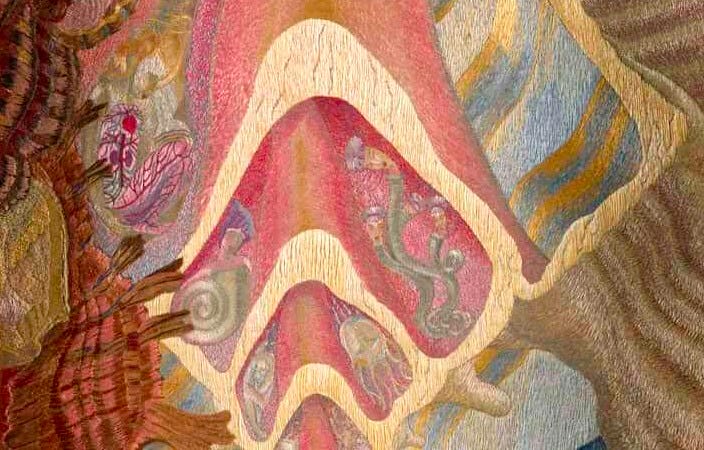
Translator Chris Holdaway presents the first English translation of modernist poet Léon-Paul Fargue’s ecstatic 1927 essay on the avant-garde silk embroideries of Marie Monnier. In Monnier’s intricate needlework, Fargue wrote, “unity emerged from diversity”—in contrast to the forced showmanship of the master artist who makes his painting “fester like a sore until the scabs fall off.”
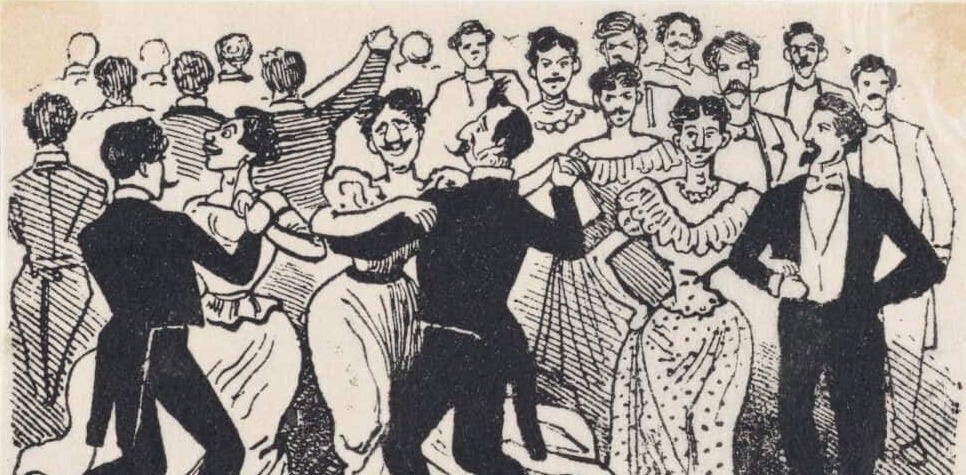
The viral miniseries Heated Rivalry may present gay love with complexity and hope, but its sympathetic treatment reveals on the film world’s preference for hypermasculine characters, observes Tanmay Pandya: “I felt as though I’d met this man on screen all too often.”
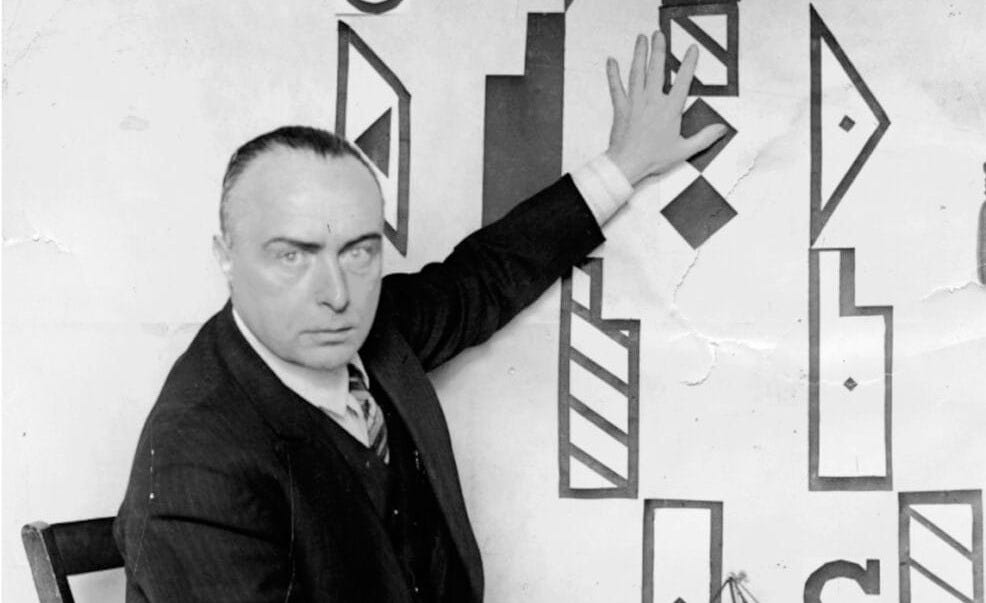
“Charmed by the ‘lovely family feeling’ and the Führer’s flower arrangements,” the choreographer Rudolph von Laban accepted Hitler’s offer of the director of the German Master Studio for Dance position in 1934. The moment was one of many bizarre incidents in the saga of Laban’s influential dance notation system; as Madeleine Adams writes in her review of Whitney E. Laemmli’s new study, Making Movement Modern, the sprawling influence of “Labanotation” would come to set “Margaret Mead in conversation with Mars Confectioners.”
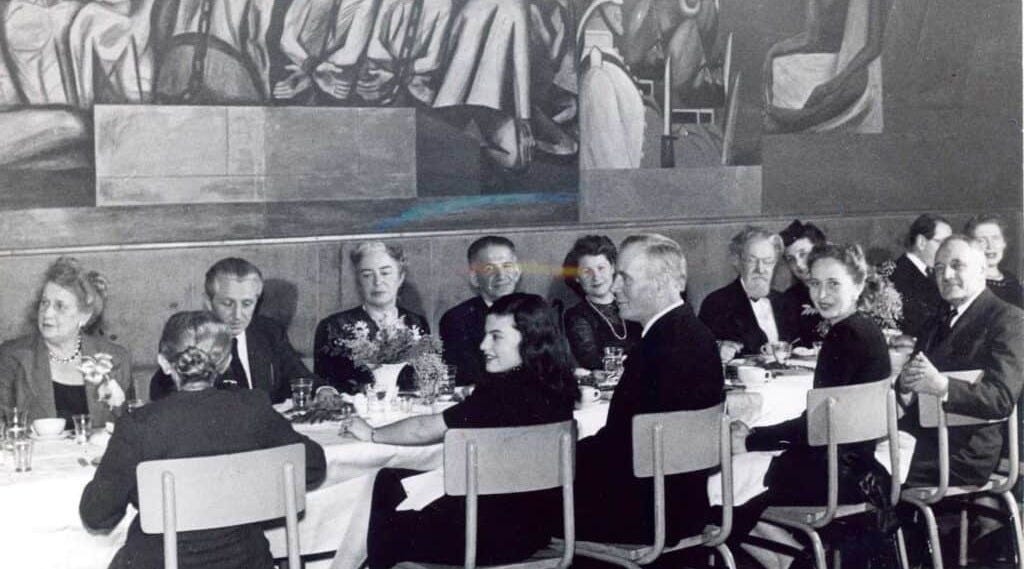
And in the latest of our series of interdisciplinary responses to The New School’s José Clemente Orozco frescoes, Mary Karmelek pens a short story riffing on a notorious incident in the mural’s history, one that involved a (literal) political coverup.
An Awful Color
Mary Karmelek
The curtains in the cafeteria hang on the eastern wall of the room, from the ceiling to the top of the wainscoting, like there is a window behind the draped fabric. Windows are the eyes to the soul, she thinks. But we are in a room looking out. Yellow curtains like eyelids, or like lining for the inside of the skull. Yellow sinuses. A backdrop to the round tables dressed in linen and silverware, a reminder of just how long she’s worked at this university. The year she began: 4 BC (Before Curtains).
The Avant-Garde Intersection of Léon-Paul Fargue and Marie Monnier
Léon-Paul Fargue / Chris Holdaway (translator)
We were dead drunk on exhibitions, salons, collections: “Just think,” he would reply, “that we paint with these filthy materials, these chemicals, these toxins, these violent poisons, medicines for external use—if you like—these oil cakes, these creams from sewage fields, these wastes from Achères, these old cheeses whose civil status we recreate, these freight excesses, roasted horse liver, sweet acorn coffee, crushed bricks, old offal, spoiled meat; just think that we butter all this muck with pig-hair handspikes, rat-beard crutches chair-leg oil, twisted wood juice, onto canvases, papers, panels salvaged from flea markets, chewed-up rags, babies’ nappies cured of green diarrhea, bedside table veneers, toilet seats …
Choreographing the Handshake of Capitalism
Madeleine Adams
Have you ever watched a video of yourself and wondered, “Why do my hands look so stiff when I gesture?” or “Geez, my walk is really galumphing!” And then, inevitably, “Would my life be different if I only knew how to move?” To this last question, the adherents of the movement visualization system Labanotation, had a definitive answer: “Yes!” As Whitney E. Laemmli shows in her new study, Making Movement Modern: Science, Politics, and the Body in Motion (University of Chicago Press, 2026), Labanotation promised that the very key to self-understanding, cultural vitality, and living authentically was making legible the codes of body movement that, to most of us klutzes, is invisible.
Everyone Loves the Straight-Passing Gay Man
Tanmay Pandya
If Heated Rivalry and all the other stories with gay characters evoked to bolster their popularity are any indication, the accepted gay figure, the recipient of audience empathy, is someone whose behavior and mannerisms, whose performance of gender, aligns more towards a cisgendered, typically masculine man, who could readily pass as straight.